Last updated November 18, 2026
How to Hire an ADU Contractor in Boulder City: A Step-by-Step Guide
The contractor who built your neighbor’s kitchen remodel and the contractor who should build your ADU are probably not the same person. In a small market like Boulder City, the gap between someone who has pulled three ADU permits locally and someone pulling their first one shows up in your schedule and your budget, not in a sales pitch. A general contractor optimizes for scope flexibility because that’s how they stay busy. An ADU specialist optimizes for permit familiarity, design coordination, and subcontractor relationships built on repetition. This guide walks you through how to tell those two apart before you sign anything, what to verify with the state, and which questions separate a real ADU builder from a confident guesser.
Quick Answer
To hire an ADU contractor in Boulder City, verify an active Nevada B-2 Residential and Small Commercial license on the state contractor board database, confirm the contractor has pulled ADU permits through Boulder City’s building department, and require a written bid that itemizes utility connections, design fees, and permit delay terms. Interview at least three candidates and ask each one how they handled a site surprise on a previous ADU. The contractor who answers with specifics, not generalities, is the one to hire.
Table of Contents
- Why an ADU Specialist Beats a General Contractor in Boulder City
- The Nevada License Class You Need to Verify
- Interview Questions That Reveal Real Local Experience
- Red Flags Specific to the ADU Market
- How to Read an ADU Contract for Scope Gaps
- Custom, Garage Conversion, or Prefab: Matching the Path to the Lot
- What Boulder City’s Climate and Geography Demand From a Build
- What the Schedule Actually Looks Like
Why an ADU Specialist Beats a General Contractor in Boulder City
ADU construction is narrow work. It’s a small structure on a residential lot that has to satisfy zoning, utility, and life-safety rules all at once, and the rules are read differently by every jurisdiction. A general contractor who builds kitchens, patios, and the occasional addition learns the permit counter once and moves on. An ADU specialist learns it repeatedly, and that repetition is the product you’re buying.
Here’s where the difference shows up in practice:
- Design coordination. ADUs live or die on site planning: where the structure sits, how it drains, how utilities reach it. A specialist has a designer who works with setbacks and lot coverage every week and knows which questions to answer before the plan set goes in.
- Utility connection. Water, sewer or septic, and electrical service upgrades are the most underestimated line on an ADU budget. A specialist flags these in the first conversation. A generalist often leaves them out and adds them later as a change order.
- Subcontractor bench. The electrician, plumber, and concrete crews an ADU builder calls are the same ones they call on every unit. That familiarity keeps the trades moving in the right sequence.
- Prefab fluency. Factory-built units from Abodu, Cover, or Dvele come with installation specs, foundation requirements, and crane and delivery logistics that a conventional builder has never had to plan around. We’ve built our process around those specs, which is a different skill from framing a wall from scratch.
None of this means a general contractor can’t build an ADU. It means you’re paying for someone’s learning curve. In a market the size of Boulder City, where the permit office knows the local builders by name, a specialist’s track record is checkable and a generalist’s is usually thin. Our entire practice is built here: Casita Builders Boulder City works only on ADUs and attached living spaces, so every process we run is tuned to this project type.
The Nevada License Class You Need to Verify
Nevada licenses residential contractors through the Nevada State Contractors Board, and ADU construction on a single-family lot generally falls under the B-2 Residential and Small Commercial classification. Before you discuss design or budget, confirm the license is active, in the right class, and held by the company you’re actually hiring, not a related entity.
Here’s how to verify it in order:
- Ask the contractor for their license number in writing, on the bid or in an email. A legitimate contractor gives it without hesitation.
- Look the number up on the Nevada State Contractors Board database. Confirm the status reads active and the classification matches residential and small commercial work.
- Check that the name on the license matches the name on your contract exactly. Similar names are a common source of confusion.
- Ask whether the company carries general liability insurance and workers’ compensation coverage, and request a certificate of insurance naming you as the property owner. The local pro is licensed and insured as their state requires, and a real contractor expects this request.
- Confirm whether the person you’re meeting is an employee of the licensed company or a sales representative for someone else.
This step takes twenty minutes and protects a five-figure investment. Skipping it is the single most common mistake we hear about from homeowners who started with another contractor and came to us after a stall. When you’re collecting bids, ask every candidate for the same documentation so you’re comparing like with like.
Interview Questions That Reveal Real Local Experience
Anyone can claim they know the local permit office. The questions below force specifics, and a contractor who is guessing will show it in the answers.
- “Walk me through an ADU project you permitted in Boulder City in the last year. What did the plan reviewer ask you to change?” A real local experience answer names the type of correction, not just “they wanted more detail.”
- “How do you handle utility connection on a lot without an existing sewer line?” This surfaces whether the contractor plans utility scope up front or treats it as an afterthought.
- “What’s your process when soil conditions differ from what the geotech report suggested?” Answers reveal whether the contractor has actually hit a surprise and how they priced it.
- “Who draws the plans, and are they on your team or a separate firm?” Design outsourcing is fine, but you want to know who coordinates it. A contractor who outsources everything is coordinating less than they claim.
- “What happens if the city comes back with a comment that changes the design?” The answer should describe a process, not a shrug.
- “Have you installed factory-built units before, and which manufacturers?” If they name Abodu, Cover, or Dvele, ask how they handled the foundation and delivery plan.
Notice that none of these questions ask about price. Price comes after competence, because a cheap bid from an unqualified contractor is the most expensive option on the table. Once you’re satisfied with the answers, ask for a written, line-item estimate and compare scope, not just totals.
Red Flags Specific to the ADU Market
ADU buyers tend to be research-savvy, which means they catch generic marketing quickly. The problems that actually hurt are subtler. Here are the warning signs we see most often:
- A quote before a site visit. ADU cost depends on setbacks, slope, drainage, and utility runs. A contractor who prices from a photo or a phone call is guessing, and the guess becomes a change order later.
- No mention of utility connection in the bid. If the estimate doesn’t address water, sewer or septic, and electrical service, it’s incomplete. That line item can be substantial and it never disappears.
- Design fully outsourced with no coordination. A contractor who hands drawings to an outside firm and never speaks to them is a middleman, not a builder.
- Vague permit language. “We handle permits” is not an answer. Ask who pulls the permit, who pays the fees, and who manages the review comments.
- No prefab experience but confident claims. Factory-built units have delivery, foundation, and crane logistics that a first-timer will underestimate. Ask for a reference on an installed unit.
- A contract with no delay clause. Permit timelines vary by jurisdiction and by plan set. A contract that doesn’t say what happens if review runs long is a contract that leaves you exposed.
One more, less obvious: a contractor who talks about “adding an ADU to their portfolio” without any ADU work in that portfolio. The ADU builders you hire should show you ADU-specific previous work, because it’s a different skill from general residential construction.
How to Read an ADU Contract for Scope Gaps
The scope section of your contract is where ADU projects get into trouble. Read it line by line and look for three things: what’s included, what’s excluded, and what happens when an exclusion turns into work. Here’s what a complete ADU contract covers.
- Permit responsibility and fees. Who submits, who pays, and who responds to reviewer comments. Get this in writing.
- Design deliverables. What drawings you receive, who owns them, and whether revisions after city comments are included or billed separately.
- Utility connection scope. Trenching, connections, meter upgrades, and who coordinates with the utility provider. Each should be listed as included or excluded.
- Site work allowances. Grading, drainage, excavation, and soil surprises. Ask how a soil condition outside the expected range is priced, and whether there’s a defined allowance.
- Schedule and delay terms. Permit review, weather, and material lead times all affect the schedule. The contract should say how delays are handled, not just when the work starts.
- Payment schedule tied to milestones. Payments should follow completed stages, not calendar dates.
- Warranty. What’s covered, for how long, and whether manufacturer warranties on prefab components are passed through to you.
Two more terms to look for: a change-order process that requires your written approval before work proceeds, and a clear statement that the written estimate sets the final price for the defined scope. A contractor who won’t put those in writing is telling you something. Before you sign, ask for the room addition contractor equivalent terms if your project is an attached addition rather than a detached unit, since the scope language differs.
Custom, Garage Conversion, or Prefab: Matching the Path to the Lot
There are three real paths to an ADU, and the right one depends on your lot, your budget, and how you want to use the space. A specialist walks you through all three and tells you which fits. A generalist usually has one path and steers you toward it.
- Ground-up custom construction. Maximum design control, built to your site. Best when the lot has room and you want the unit to match a specific use, whether that’s aging parents moving in or a long-term rental.
- Garage conversion. If you already have a detached or attached garage, you have structure to work with, which can shorten the project and stretch the budget. The trick is that garage conversions need careful planning for insulation, ventilation, and utility routing, and not every garage converts cleanly.
- Prefab. Factory-built units from manufacturers like Abodu, Cover, or Dvele arrive engineered and inspected at the factory. Installation still requires local site work, foundation, and utility connections, which is where a contractor’s local experience matters most.
Here’s the point that gets missed: prefab doesn’t remove the contractor from the equation. It relocates the contractor’s job to the site. Site prep, foundation, utility trenching, delivery logistics, and final connections are all local work, and they’re where most prefab headaches come from. We’re an authorized builder for Abodu, Cover, and Dvele, and what we bring to those projects is the local-install expertise on top of the manufacturer’s standards. You get manufacturer-backed quality standards plus local craftsmanship, which is a better combination than either alone.
If you’re unsure which path fits, start with your lot. A site visit tells you what’s realistically possible and what each path would involve. A specialist will tell you when a garage conversion is the wrong answer, which is as valuable as telling you when it’s right.
What Boulder City’s Climate and Geography Demand From a Build
Boulder City sits in the Mojave Desert near Lake Mead, and the local climate is a design constraint, not a detail. The summer heat shapes everything from insulation choices to window placement to how the roof sheds sun. Any ADU contractor in Boulder City who doesn’t bring up cooling and shading on the first visit is not planning for the site.
What the local climate demands from a build:
- Heat management. Insulation, roof finish, and orientation matter more here than in a mild climate. A unit designed without serious attention to cooling will cost more to operate and feel worse to live in.
- Water and drainage. Rain is rare but can arrive in concentrated bursts. Site grading and drainage determine whether water reaches the unit or runs around it. Grading should be a planned line item, not a surprise.
- Utility runs. Rocky desert soil and long utility runs affect trenching and cost. This is one reason we want eyes on the site before we quote.
- Wind and sun exposure. Exposure on an open lot near the lake differs from exposure in a sheltered neighborhood, and the design should respond to what the site actually gets.
None of this is exotic. It’s just the difference between a builder who works in this climate regularly and one who learned in a different one. When you’re interviewing, ask how a proposed unit will handle summer heat and where stormwater will go. The answer tells you a lot about the contractor’s process.
What the Schedule Actually Looks Like
Every ADU project moves through the same broad phases, and knowing them helps you evaluate a contractor’s plan and recognize when something’s off track.
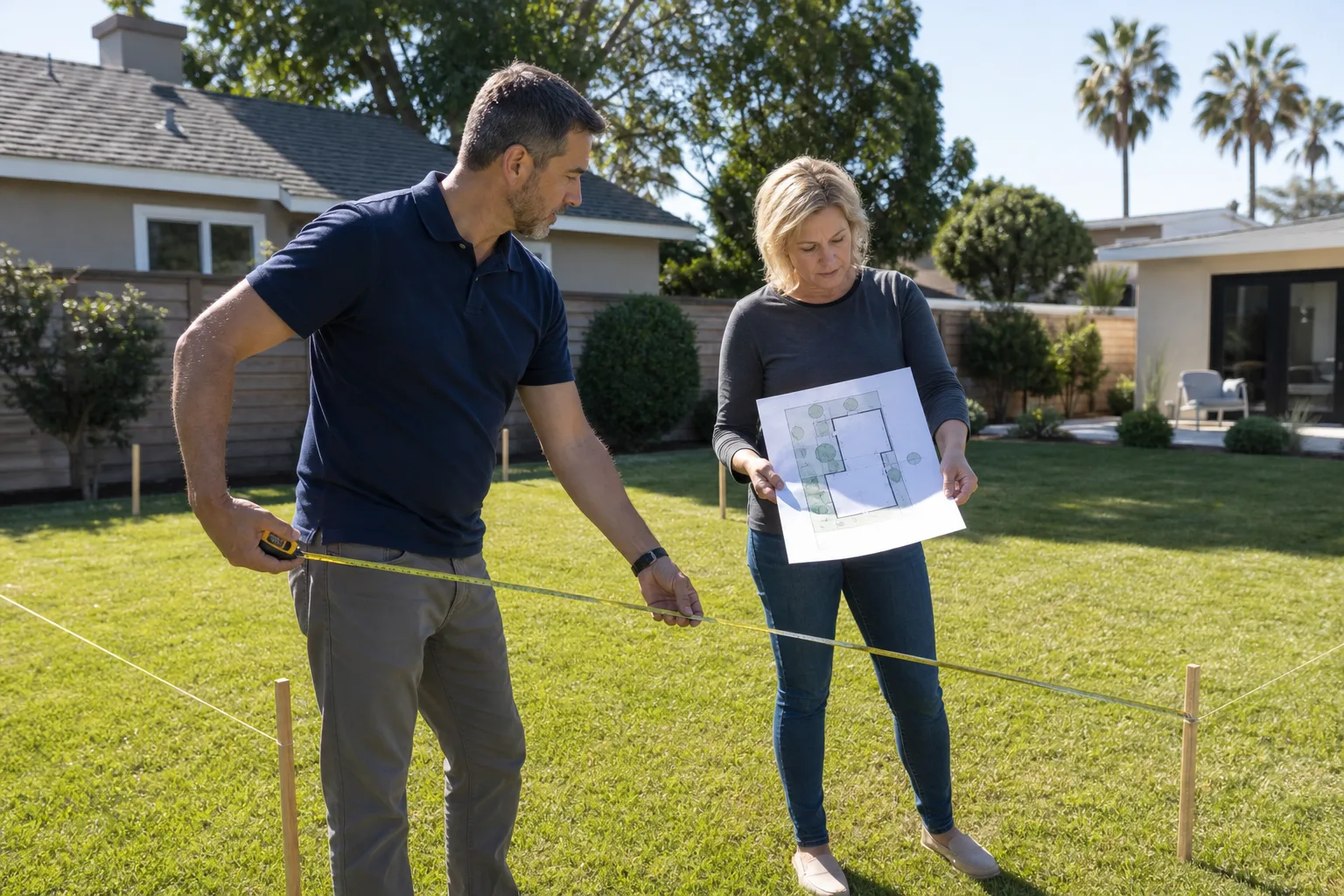
- Feasibility and site visit. Lot constraints, setback review, utility access, and the shortlist of viable pathways.
- Design and drawings. Plans prepared for permit submission, with your input on layout and features.
- Permit submission and review. This is the phase that varies most by jurisdiction. Boulder City reviews ADU plans through its building and planning departments, and the review calendar is set by the city, not by us. That’s why the schedule belongs in the written estimate rather than a verbal promise.
- Site preparation and foundation. Grading, trenching, utility rough-in, and the foundation pour.
- Construction or installation. On-site build for custom and conversion projects; delivery and assembly for prefab units.
- Finishes, inspections, and final walkthrough. Permit inspections passed before the unit is handed over, with a walkthrough to confirm the work matches the scope.
Ask a contractor to describe each phase for your specific project and to identify what could shift it. A contractor who promises a fixed finish date before a plan set exists is overpromising. A contractor who explains which phases they control and which they don’t is being straight with you. For a broader look at how these phases work in different parts of the valley, the city page for Boulder City covers the local permitting context.
Common Mistakes to Avoid
- Hiring on price alone. The lowest ADU bid is usually the one with the most scope left out. Compare the line items and ask what’s excluded before you compare totals.
- Skipping the license check. Twenty minutes on the Nevada State Contractors Board database can save you a year of trouble. Verify the exact company name on the contract matches the license.
- Not asking about utility connection. Water, sewer, and electrical service upgrades are the biggest line items that go missing from ADU bids. If the bid doesn’t mention them, ask.
- Accepting a quote without a site visit. Setbacks, slope, and drainage are lot-specific. A price quoted from a phone call is a number, not a bid.
- Letting design go uncoordinated. A contractor who outsources design and never speaks to the designer is leaving the single most important phase unmanaged.
- Signing a contract without a delay clause. Permit review timelines vary by jurisdiction. The contract should say what happens if review runs long, not just what happens if it runs on time.
- Ignoring the local climate in design. A unit designed for a mild climate will underperform in the desert. Cooling, shading, and drainage belong in the design conversation from the start.
When to Call a Professional
Some decisions about an ADU can wait. Some shouldn’t. Call a professional when you’re still deciding whether an ADU is feasible on your lot, because a site visit answers questions no amount of reading will. Call when you already have a garage and want to know whether conversion makes sense versus a ground-up build. Call when you’ve gotten a bid and something in the scope section doesn’t add up. And call before you commit to a design, since design changes after permit submission get expensive fast.
Casita Builders Boulder City offers free estimates in Boulder City. Call (888) 294-3269 to schedule yours. We answer 24/7, with fast dispatch from 7am to 7pm, Sunday through Friday. The estimate is free and the written line-item quote sets the price for the scope it covers.
Frequently Asked Questions
Nevada licenses residential contractors through the Nevada State Contractors Board, and ADU construction generally falls under the B-2 Residential and Small Commercial classification. Verify the license on the state board database before you sign anything. Call (888) 294-3269 for a free estimate and we’ll walk you through what to check.
ADU costs in Boulder City depend on the pathway you choose, the site, and the utility work involved, so a range quoted without a site visit is not a reliable number. The written estimate is what sets the final price for the defined scope. Call (888) 294-3269 to schedule a free site visit and a line-item estimate.
Prefab can reduce some construction costs, but the site work, foundation, and utility connection are still local and still necessary. The savings vary by unit and site, and the honest answer is that you need a line-item comparison for your specific lot. Call (888) 294-3269 for an estimate that shows both paths side by side.
Many garages can be converted, but it depends on the garage structure, the lot, and local zoning rules, which we confirm with the city’s planning and building department before plans are final. A garage conversion often shortens the project because the structure already exists. Call (888) 294-3269 to schedule a free assessment.
The schedule depends on the design, the permit review calendar, and the construction method, so we set it in the written estimate rather than promising a date up front. Permit review timelines vary by jurisdiction, and that phase is set by the city, not by us. Call (888) 294-3269 for a schedule estimate specific to your project.
Yes, a site visit is the only way to price an ADU accurately, because setbacks, slope, drainage, and utility runs are lot-specific. Any quote given before someone has seen the property is a guess. Call (888) 294-3269 to schedule your free site visit.
The Bottom Line
Hiring an ADU contractor in Boulder City comes down to three checks: verify the B-2 license on the state board database, ask interview questions that force specifics about local permitting, and read the contract for utility scope, design coordination, and delay terms. A specialist firm produces a different outcome than a generalist because permit familiarity, design coordination, and trade relationships come from repetition, not from flexibility. Whether you go custom, convert a garage, or install a prefab unit from Abodu, Cover, or Dvele, the person coordinating your project should be doing ADU work as their core practice. That’s the standard we hold ourselves to at Casita Builders Boulder City, and it’s the standard you should hold every contractor to.
Call (888) 294-3269 to schedule your free estimate. We answer 24/7. Fast dispatch from 7am to 7pm, Sunday through Friday.
Written by the team at Casita Builders Boulder City.