Last updated November 18, 2026
Utilities for an ADU: Water, Sewer, Power and Meters
Most homeowners planning an ADU budget for the building. The building is the visible part – the walls, the roof, the kitchen, the finishes you can picture. The utilities are invisible until they aren’t, and that’s where ADU budgets in Boulder City tend to go sideways. Adding a second kitchen and bathroom to your property doesn’t just mean running a few pipes. It may trigger a water meter upgrade, a sewer capacity review, and an electrical panel replacement on the primary home. Those three items alone can add $20,000 to $40,000 to a project budget that never showed up in the contractor’s first quote. This guide walks through how water, sewer, power, and gas connections actually work for an ADU in Boulder City, when you need a separate meter and when you don’t, and how those decisions shape rental income and resale value later.
Quick Answer
Utility connections for an ADU in Boulder City usually require three separate reviews: whether your water service can support a second dwelling unit or needs a second meter, whether your existing sewer lateral has the capacity for a second unit, and whether your electrical panel has room for a new load or needs an upgrade or a new service entrance. Gas connections depend on whether the ADU uses gas appliances. The total utility cost often runs $20,000 to $40,000, sometimes more, and it’s the single most underestimated line in most ADU budgets.
Table of Contents
- Why utility connections are the underestimated cost
- Water service: second meter vs. sub-meter
- Sewer capacity and your existing lateral
- Electrical service: panel upgrade vs. new service entrance
- Gas service for ADUs with gas appliances
- Separate vs. shared utilities: billing, tenants, resale
- The sequencing: when to call the utility, the city, and your builder
- Common mistakes to avoid
Why utility connections are the most underestimated cost in an ADU project
Homeowners tend to assume an ADU piggybacks on the existing house. The house already has water, sewer, power, and gas, right? Running a line from the back of the house to a small building in the yard shouldn’t be a major line item. That assumption is the problem. An ADU is a second dwelling unit. It has its own kitchen, its own bathroom, its own heating and cooling, and often its own laundry. From the utility’s point of view, that’s a new customer, not an extension of the first one.
In Boulder City, the assumption gets shakier because of the age of the housing stock in many neighborhoods. Some of the older blocks were built when a single-family home was the only thing on the lot, and the infrastructure that serves those blocks wasn’t sized for a second dwelling unit behind the main house. Water service lines, sewer laterals, and electrical panels in older Boulder City homes were sized for one household’s demand. Add a second, and the numbers don’t always hold.
Here’s what actually gets reviewed on an ADU project:
- Can the water service line and meter handle the additional demand, or does a second meter get required?
- Can the existing sewer lateral carry the additional flow, or does it need to be upsized, replaced, or re-routed?
- Does the electrical panel have the capacity for the new load, or does it need an upgrade or a new service entrance?
- If the ADU uses gas, does it share the existing line or need a new meter?
None of these decisions is made in a vacuum, and none of them can be skipped. Our technicians have up to 12 years of experience with ADU projects, and the pattern is consistent: the utility review is what determines whether an ADU is a straightforward build or a structural surprise. The earlier that review happens, the more accurate the budget. As a team focused exclusively on ADU builders, we start every project by pulling the utility picture into focus before any design is locked.
Water service: second meter vs. sub-meter
Adding a second dwelling unit to your lot means the water demand roughly doubles. Two kitchens, two bathrooms, possibly a washer. Whether your existing water service can support that is the first question a Boulder City ADU project has to answer. There are two paths: keep the ADU on a shared service with a sub-meter, or install a second water meter dedicated to the ADU.
When a shared service with a sub-meter is permitted
A sub-meter is a meter installed on the ADU’s branch of the water line, downstream of the primary meter. The city still bills the property through the primary meter, and the sub-meter simply tracks how much water the ADU uses so the property owner can divide the bill fairly. Many cities allow this arrangement for ADUs, particularly where the existing service line is adequately sized. In Boulder City, whether a sub-meter works depends on the city’s water utility rules and on the actual capacity of your service line and meter. We confirm that with the city’s water department before plans are final.
When a second water meter is required
A second meter means a new physical connection to the water main, a new tap, a new meter box, and a new account. That’s a materially larger cost than a sub-meter. It’s also sometimes the only option when the existing service can’t handle the additional flow, when the ADU is far enough from the main line that running a new tap is cleaner than upsizing the existing service, or when the city requires a separate account for a second dwelling unit. The rules are city-specific, so you can’t take what you heard from a friend in another Nevada town and apply it here.
Water connection costs, typically
- Sub-meter installation: typically in the low thousands, plus plumbing to route the branch line.
- New water tap and second meter: typically several thousand dollars in connection fees plus trenching and plumbing.
- Main line upsizing: depends on distance to the main and the condition of existing piping, but it can push the water piece into five figures on its own.
Those numbers are estimates and depend on your lot, the distance to the main, and the current fee schedule, which the city controls. The written estimate sets the final price. What matters up front is that you ask the question: does this ADU get a second meter or a sub-meter? If the answer is second meter, plan for that number in the budget before design starts.
Sewer capacity and your existing lateral
Sewer is where a lot of ADU projects in older neighborhoods get interesting. The existing lateral – the pipe that runs from your house to the city sewer main – was sized for one household. Add a second dwelling unit and the flow through that lateral roughly doubles. Whether it can carry the additional load depends on its size, material, condition, and the slope of the run.
How the city evaluates an existing lateral usually comes down to three things:
- Diameter and material. Older laterals may be undersized for the combined flow of two dwelling units, and some older materials are more prone to failure or root intrusion. The city or your plumbing contractor can confirm the actual pipe.
- Slope and length. A long, shallow run carries less than a short, steep one. An ADU placed at the back of a deep lot often means a longer lateral to reach the main, and that changes the math.
- Condition. A camera inspection of the existing lateral is often how the city and your contractor confirm whether it can serve a second unit. If the lateral is cracked, root-invaded, or collapsing, replacement becomes part of the project.
What happens when the lateral can’t handle it
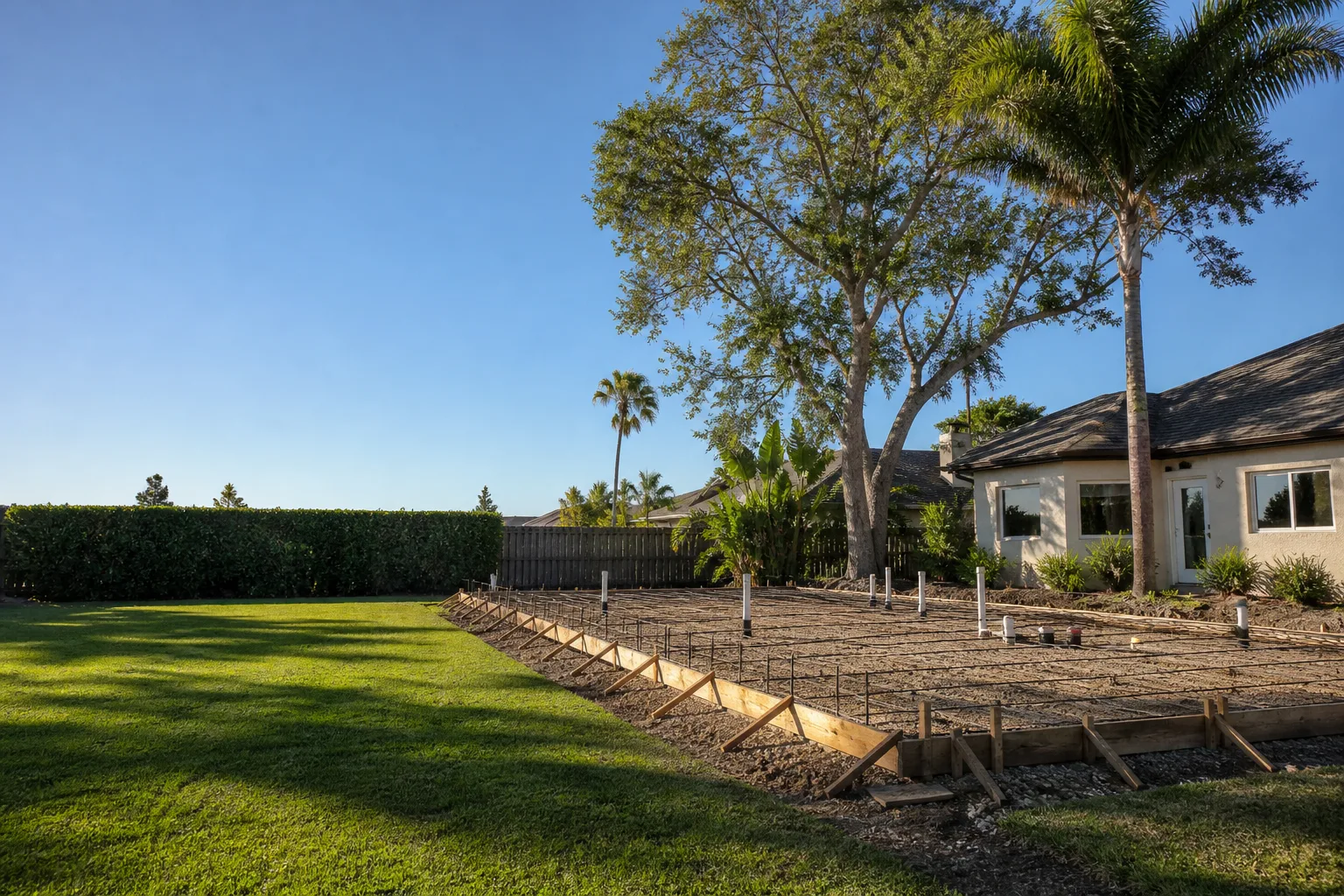
If the existing lateral can’t serve a second unit, the options are to upsize or replace it, or to add a new lateral from the ADU to the main. Both are costly. A new lateral means trenching across the lot, cutting into the yard, sometimes cutting into hardscape, and paying the city’s connection fee for a new sewer tap. In older Boulder City neighborhoods, the grading and the position of the main on the street can make this a challenging run.
Because the sewer question is so consequential, we treat it as the first thing to answer, not the last. A project that looks like a $20,000 utility overage often turns out to be the sewer lateral, and it’s far better to know that before you’ve designed the ADU around a location that can’t drain.
Electrical service: panel upgrade vs. new service entrance
An ADU needs its own electrical load: heating and cooling, appliances, water heating, lighting, and possibly a car charger. The primary home already has a panel serving its own load. The question is whether that panel has room for a second dwelling unit. Sometimes it does. Often it doesn’t, and that’s when you choose between a panel upgrade and a new service entrance.
Panel upgrade on the main home
A panel upgrade means replacing the existing electrical panel with a larger one, and possibly upgrading the service wiring from the utility feed. If the existing panel is old, undersized, or already close to capacity, an upgrade is usually the cleanest answer because it serves both structures from one larger panel. It also leaves the ADU feeding off the same service as the main house, which simplifies metering.
New service entrance
A new service entrance is a separate electrical service for the ADU: a new meter, a new panel on the ADU, and a new feed from NV Energy. This is more expensive than an upgrade in most cases, and it turns the ADU into a separately metered electrical customer. It’s sometimes required when the ADU is far from the main panel or when the existing service can’t be upgraded feasibly.
How NV Energy’s process works
NV Energy is the electric utility in Boulder City, and adding electrical service to a detached ADU runs through their service request process. In general, that involves:
- Submitting a service application to NV Energy with the proposed load and the location of the property.
- NV Energy reviewing whether the existing transformer and distribution can support the added load, or whether infrastructure upgrades are needed.
- Coordinating the meter location and the connection point with your electrician and the city’s building department.
- Having the work inspected before the meter is energized.
Lead times for the NV Energy review are not something anyone can quote accurately in advance, because they depend on the utility’s workload and on whether the transformer needs upgrading. The schedule for the electrical connection is set in the written estimate, and the actual dates come from NV Energy’s process. Don’t assume the transformer is available until the utility confirms it.
Electrical work at the panel is genuinely dangerous, and none of this is a DIY project. A licensed electrician makes this call. The safety caveat matters: a professionally installed and inspected panel is what makes the whole ADU project insurable and financeable.
Gas service for ADUs with gas appliances
Not every ADU uses gas. All-electric ADUs are common, and prefab units from manufacturers like Cover or Dvele often lean electric. But if the ADU uses gas – a gas range, a gas water heater, a gas furnace, or an outdoor connection – the gas service becomes part of the utility plan.
There are two viable arrangements:
- Shared gas line with the main house. The ADU draws from the same gas meter as the primary home. This is often code-compliant when the existing meter and line can carry the combined demand. It’s the simpler and cheaper path.
- New gas meter. A separate gas service and meter for the ADU, sharing nothing with the main house. This is required when the existing service can’t handle the additional load or when the city or utility requires a separate account.
Which arrangement applies depends on the existing meter size, the gas line’s capacity, and what the ADU’s appliances will actually draw. A gas water heater plus a gas range is a meaningful additional load on a residential meter. Ask the question early: can the shared meter carry the ADU, or do we need a new meter? The answer affects the utility budget and the trenching plan for the yard.
Gas work is also not a homeowner job. Any gas line change or new meter involves a licensed plumber and a city inspection. A leak is a serious safety issue, and the inspection is what protects you.
Separate vs. shared utilities: billing, tenants, and resale
Once you know what’s possible, the next decision is what you actually want. Separate and shared utilities aren’t just a cost question; they shape how the ADU functions over its life. Here’s the practical difference:
Separate utilities
- Tenant independence: The ADU tenant gets their own accounts and pays their own bills directly. No awkward conversations about splitting the water bill with the person living behind the main house.
- Rental cleanliness: Separate meters remove the main source of dispute between an ADU tenant and the main house. That can make the ADU more attractive to prospective tenants.
- Resale value: A separately metered ADU is generally easier to value and easier to finance, because it functions as two independent dwelling units on the same parcel.
- Cost: Higher upfront. Separate meters require the connection, the meter, and the account setup for each utility.
Shared utilities with sub-meters
- Lower upfront cost: You skip the connection fee for each utility and the physical tap work.
- Lower long-term tenant independence: The main house keeps the accounts, and the sub-meter is the fair-billing mechanism. That works well for family ADUs, and less well for market-rate rentals.
- Resale: A shared-utility ADU is still valuable, but a buyer planning to rent the unit may prefer the independence of separate meters.
The right answer depends on how you’ll use the ADU. An ADU built for aging parents has one set of needs. An ADU built for rental income has another. We ask that question first, because it drives the utility strategy. The design and the utility plan have to be decided together.
The sequencing: when to call the utility, the city, and your builder
The most reliable way to avoid a utility surprise is to follow the right order. Here’s the sequence we use on ADU projects in Boulder City:
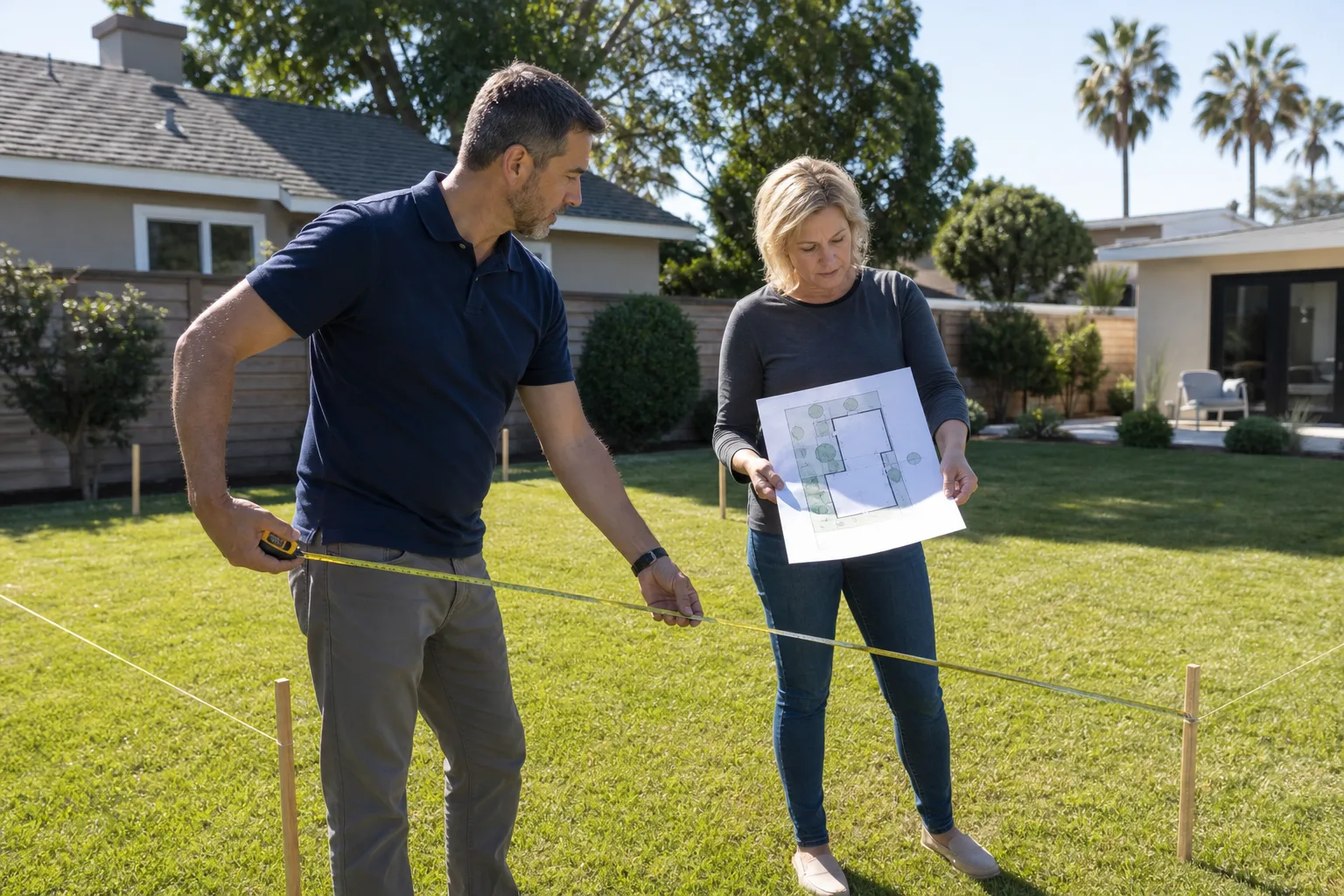
- Confirm what the city allows on your lot. Zoning and ADU eligibility come first. The city’s planning department confirms what’s allowed, and the answer shapes every utility decision that follows.
- Pull the existing utility picture. Find the water service size and meter, the sewer lateral size and material, the electrical panel capacity, and the gas meter size. This is the baseline the utility review works from.
- Run the capacity reviews. Water, sewer, electrical, and gas each get their own check. If the sewer lateral is a question, a camera inspection answers it. If the electrical panel is close to full, an electrician’s load calculation answers it.
- Get the utility-specific answers. Water department: second meter or sub-meter. Sewer department: can the existing lateral serve a second unit. NV Energy: does the transformer support the new load, and what’s the connection process. Gas utility: shared line or new meter.
- Lock the design to the utility reality. Prefab ADUs from manufacturers like Abodu come with a defined utility connection approach. Custom builds can be designed around the sewer and water locations. The design should flex to the utility, not the other way around.
- Confirm permits and fees. The city’s building department handles the permits and fee schedule. Utilities are confirmed before final design so the permit application reflects the actual connection plan.
We’re set up for this sequence because utilities and ADUs are inseparable. The Casita Builders Boulder City approach is to start the utility review at the same time as the design conversation. That’s how the budget stays honest and the schedule is set by the written estimate rather than by surprises.
Common Mistakes to Avoid
- Assuming the ADU piggybacks on everything. Most ADU budgets get into trouble because the homeowner assumes the existing water, sewer, and electrical will serve a second unit without change. They often won’t, and the utility review should happen before design.
- Pricing the build before pulling the utility picture. A quote based only on the structure is a partial quote. The utility connections can add five figures, and the estimate should include them.
- Skipping the sewer camera inspection. In older Boulder City neighborhoods, a sewer lateral that looks fine from the yard can be undersized or root-damaged. A camera inspection is cheap insurance against a lateral replacement surprise.
- Missing the NV Energy capacity question. The transformer serving your block may not support the added electrical load. Ask NV Energy early, not after the ADU is framed.
- Assuming a sub-meter is always allowed. Sub-metering is permitted in many cases, but not universally. It depends on the city’s utility rules and the capacity of your existing service.
- Designing the ADU before decisions on separate vs. shared utilities. Whether the ADU has its own meters changes the layout, the trenching, and the rental strategy. Decide it before the design is fixed.
- Treating gas like an afterthought. If the ADU has gas appliances, the gas meter question belongs in the utility plan from day one. Adding gas capacity later is more expensive than planning for it.
When to Call a Professional
Call us when you’re still deciding what’s possible on your lot, not just when you’ve already picked a design. The utility picture is what tells you whether an ADU is a clean build or one that needs a sewer lateral replacement, a second water meter, and an electrical panel upgrade. If your home is older, if your electrical panel is already close to full, or if you’re planning a prefab unit from Abodu, Cover, or Dvele whose utility connection needs to match the manufacturer’s spec, that’s the point to bring in a specialist. DIY utility work on water, sewer, electrical, and gas is not a project to take on: panel work and gas lines especially need a licensed professional. Casita Builders Boulder City offers free estimates in Boulder City – call (888) 294-3269. We answer 24/7. Fast dispatch from 7am to 7pm, Sunday through Friday.
Frequently Asked Questions
Not always. Whether you need a second water meter or can use a sub-meter arrangement depends on the city’s water utility rules and on the capacity of your existing water service. If the existing service can carry the ADU’s additional demand, a sub-meter is often permitted. If the service is undersized or the city requires a separate account for a second dwelling unit, a second meter is required. We confirm the answer with the city’s water department before plans are final. Call (888) 294-3269 for an exact quote on the water side of your project – estimates are free.
It depends on the lateral’s diameter, material, slope, and condition. A second dwelling unit roughly doubles the flow through the lateral, and in older Boulder City neighborhoods that can exceed what the pipe was sized for. A camera inspection is usually how the city and your contractor confirm whether the lateral can serve the second unit. If it can’t, the options are to upsize, replace, or add a new lateral, and that’s a significant cost that belongs in the budget. Call (888) 294-3269 to talk through what your sewer situation likely needs – estimates are free.
The path runs through NV Energy, which is the electric utility in Boulder City. Adding service to a detached ADU means submitting a service application, having NV Energy review whether the transformer and distribution can support the added load, coordinating the meter location with your electrician and the city, and having the work inspected before the meter is energized. Sometimes the answer is a panel upgrade on the main home; sometimes it’s a new service entrance for the ADU. Call (888) 294-3269 to discuss the electrical plan for your ADU – estimates are free.
Usually, yes. A panel upgrade serves both structures from one larger panel and skips the cost of a new meter and a new feed from NV Energy. A new service entrance becomes the better answer when the ADU is far from the main panel, the existing service can’t be upgraded feasibly, or the property owner wants a separately metered ADU. Both are legitimate paths, and the right one depends on your panel, your lot, and your plans for the unit. Call (888) 294-3269 for an exact quote – estimates are free.
Often, yes, if the existing meter and gas line can carry the combined demand. A shared gas line with the main house is the simpler and cheaper path when it’s code-compliant. A new gas meter becomes necessary when the existing service can’t handle the additional load or when the city or the utility requires a separate account. Gas work involves a licensed plumber and an inspection, and a leak is a serious safety matter, so this is not a homeowner project. Call (888) 294-3269 to talk through the gas question – estimates are free.
Separately metered utilities generally make an ADU easier to value, easier to finance, and more attractive to renters who want their own accounts. A shared-utility ADU with sub-meters is still valuable, and works well for family use where the owner keeps the accounts. The resale math depends on whether buyers see the ADU as a rental unit or as family housing. Call (888) 294-3269 to work out which utility strategy fits your long-term plans – estimates are free.
The Bottom Line
Utilities are the line item homeowners miss on an ADU budget, because the assumption that the ADU simply piggybacks on the house doesn’t hold up under the city’s and the utility’s review. In Boulder City, the water service, the sewer lateral, the electrical panel, and the gas meter each have to answer whether they can serve a second dwelling unit, and the answer sometimes means a second meter, a lateral replacement, or a new service entrance. That’s why we start every project with the utility review before the design is set. If you’re planning an ADU, garage conversion, or attached living space – whether the design is custom or a prefab unit from Abodu, Cover, or Dvele – the utility plan is where the budget gets honest. Call Casita Builders Boulder City at (888) 294-3269 to schedule your free estimate. We answer 24/7. Fast dispatch from 7am to 7pm, Sunday through Friday.
Where this fits in the bigger picture
An ADU is one project with several moving parts, and the utility side connects to all of them. If your plan leans toward a from-the-ground build, our adu builders page covers the construction side. If you’re thinking about converting existing square footage instead, a room addition contractor can talk through attached living space. And if you’re still weighing whether an ADU is right for your property at all, the local context on the boulder city page is a good place to start. Wherever you are in the process, the utility question comes first. Call (888) 294-3269 to talk it through with a team that does this work every day. We answer 24/7. Fast dispatch from 7am to 7pm, Sunday through Friday.
Written by the team at Casita Builders Boulder City.